🧬 Species Name & Origin
- Scientific Name: Petaurus breviceps
- Native to: Australia, Indonesia, Papua New Guinea
- Type: Nocturnal, arboreal (tree-dwelling) marsupial
📏 Size & Appearance
- Adult Size: 5–7 inches (body) + 6-inch tail
- Weight: 100–160 grams
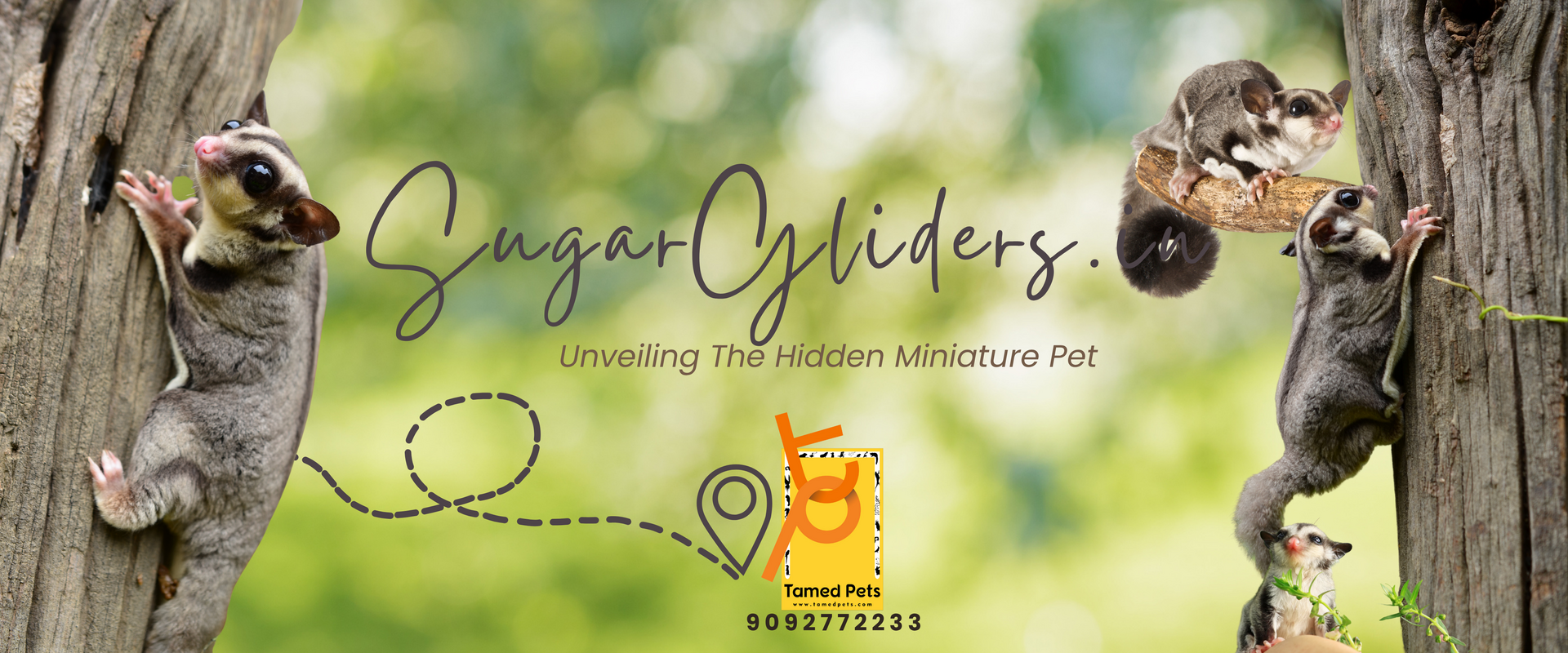
- Appearance: Soft fur, large eyes, gliding membrane (patagium) between front and back legs
🧠 Behavior & Personality
- Highly social
- Bond strongly with their owners and other gliders
- Active at night (nocturnal)
- Require mental stimulation and human interaction
🧡 Temperament
- Curious and playful
- Can nip if scared or untrained
- Needs time and patience to bond
- Should not be kept alone — thrive in pairs/groups
🗣️ Sounds They Make
- Crabbing (when scared)
- Barking (communication or attention-seeking)
- Chirping (when happy or eating)
- Hissing (light social sounds)
🧴 Diet
- Omnivorous:
- Fresh fruits & vegetables
- Glider-safe protein sources (boiled egg, insects, lean meat)
- Special sugar glider pellets
- Nectar mixes (like HPW, BML, or Glider Complete)
- Always provide fresh water
🏠 Cage Requirements
- Minimum Size (for 1–2 gliders): 2.5 ft (W) x 2 ft (D) x 3+ ft (H)
- Vertical space is important for climbing
- Include:
- Sleeping pouch
- Branches, ropes, toys
- Glider-safe wheels
- Hideouts and climbing options
🩺 Health & Lifespan
- Lifespan: 12–15 years in captivity (with good care)
- Require exotic vet care
- Regular nail trimming
- Susceptible to calcium deficiency if diet is imbalanced
⚖️ Legal Status in India
- Allowed if captive-bred and legally possessed
- Always check local wildlife and customs laws
🧳 Glider Essentials Checklist (Starter Kit)
- Bonding pouch
- Cage and accessories
- Glider-safe food & calcium supplement
- Toys and chew items
- Heat pad (if climate is cold)
🚫 Common Mistakes to Avoid
- Keeping a single glider
- Feeding only fruits or junk food
- Using metal wheels or toxic wood/toys
- Neglecting bonding time
- Using cages with large bar gaps